What are amino acids?
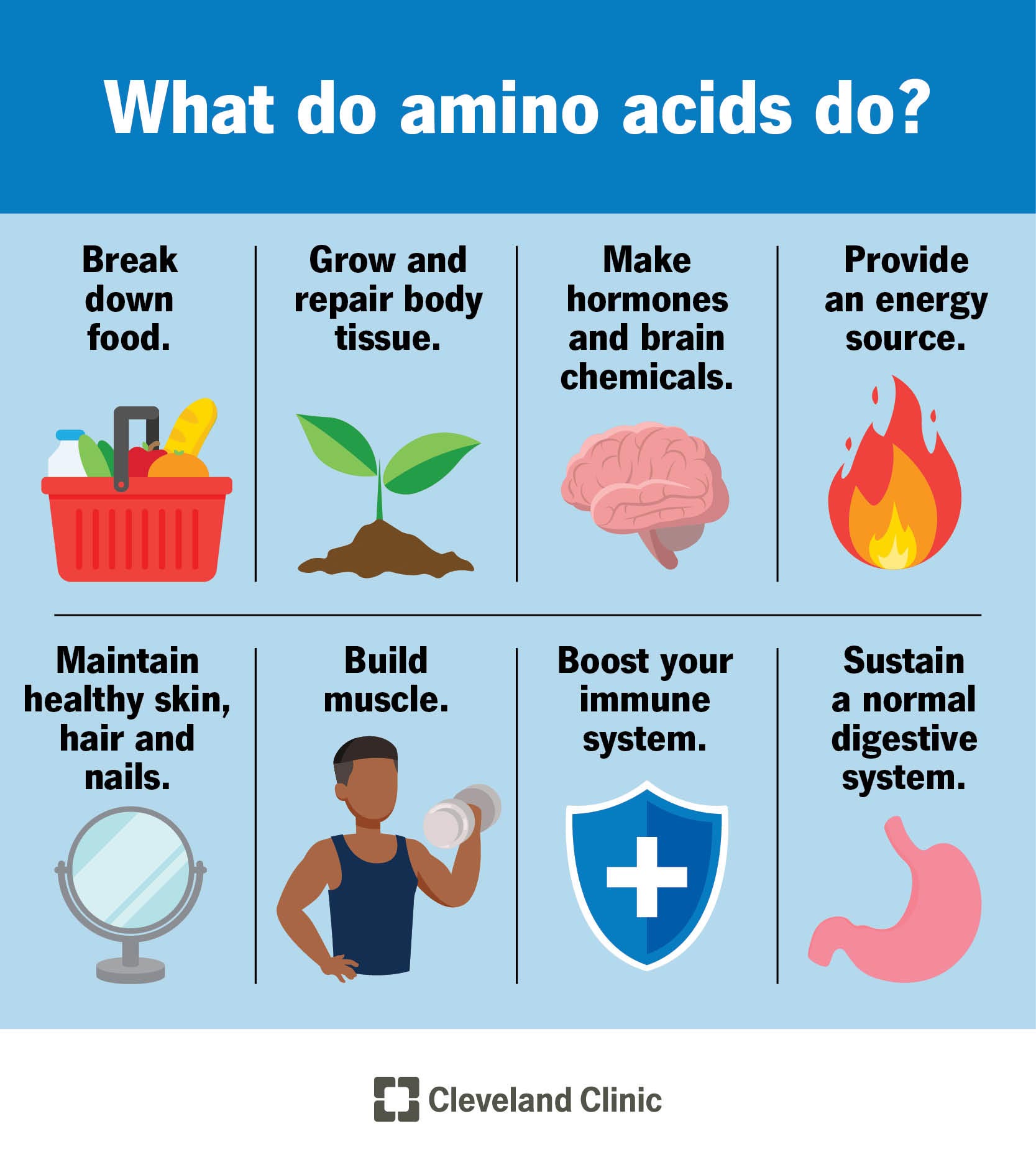
Amino acids are the building blocks of protein. Proteins are long chains of amino acids. Your body has thousands of different proteins that each have important jobs. Each protein has its own sequence of amino acids. The sequence makes the protein take different shapes and have different functions in your body.
You can think of amino acids like the letters of the alphabet. When you combine letters in various ways, you make different words. The same goes for amino acids — when you combine them in various ways, you make different proteins.
What are the different types of amino acids?
Your body needs 20 different kinds of amino acids to function correctly. These 20 amino acids combine in different ways to make proteins in your body.
Your body makes hundreds of amino acids, but it can’t make nine of the amino acids you need. These are called essential amino acids. You must get them from the food you eat. The nine essential amino acids are:
- Histidine: Histidine helps make a brain chemical (neurotransmitter) called histamine. Histamine plays an important role in your body’s immune function, digestion, sleep and sexual function.
- Isoleucine: Isoleucine is involved with your body’s muscle metabolism and immune function. It also helps your body make hemoglobin and regulate energy.
- Leucine: Leucine helps your body make protein and growth hormones. It also helps grow and repair muscle tissue, heal wounds and regulate blood sugar levels.
- Lysine: Lysine is involved in the production of hormones and energy. It’s also important for calcium and immune function.
- Methionine: Methionine helps with your body’s tissue growth, metabolism and detoxification. Methionine also helps with the absorption of essential minerals, including zinc and selenium.
- Phenylalanine: Phenylalanine is needed for the production of your brain’s chemical messengers, including dopamine, epinephrine and norepinephrine. It’s also important for the production of other amino acids.
- Threonine: Threonine plays an important role in collagen and elastin. These proteins provide structure to your skin and connective tissue. They also help with forming blood clots, which help prevent bleeding. Threonine plays an important role in fat metabolism and your immune function, too.